






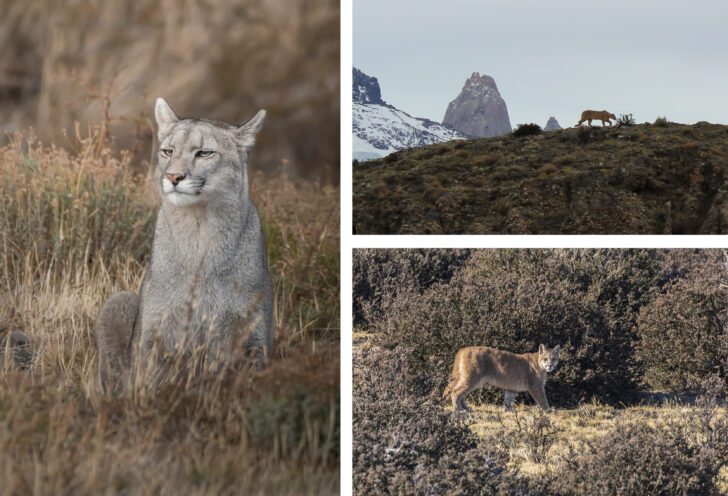
Pumas, also known as mountain lions or cougars, are among the most widespread mammals in the world, with their habitat spanning from the Yukon in Canada through different ecosystems — such as lowlands, tropical rainforests, and mountainous regions — all the way down to the Strait of Magellan in southern Patagonia. This elusive feline is reclusive and solitary, so sightings tend to be few and far between. In Patagonia, however, thanks to protection laws and conservation efforts, the wild puma population has been rebounding in recent years, and the chances of seeing a mountain lion in its natural habitat are now significantly higher.
PUMAS IN PATAGONIA: ARGENTINA vs. CHILE
Although united in its strong cultural identity and undeniable natural beauty, Patagonia is split geographically and politically between two countries: Argentina and Chile, and when it comes to protecting pumas, each country has taken a different approach.
Historically, pumas in Patagonia have been threatened by factors such as hunting, habitat loss and fragmentation, and a lack of prey. In 1980, however, the Chilean government completely banned the hunting, possession, transportation, and commercialization of pumas in order to protect this vulnerable and endangered species. Since then, both state- and privately-funded conservation efforts have enabled the recovery and reappearance of healthy wild puma populations, especially in Patagonia.
Just over the border, it’s a different story. Puma hunting remains legal and is even encouraged in Argentina. There are only a few protected areas for pumas, and although regulated and reduced to certain seasons and areas, sport hunting of pumas is allowed, with some provinces even offering compensation for dead pumas. Sheep, goats, and other livestock are ideal prey for mountain lions, so it is seen as a threat to livestock farming, which makes up an important part of the local economy, especially in Patagonia.
Although it is still possible to see pumas in Argentina, sightings are not as common as they are in Chile, so if spotting a puma is high on your wish list, I’d highly recommend including some time on the Chilean side of Patagonia during your trip.
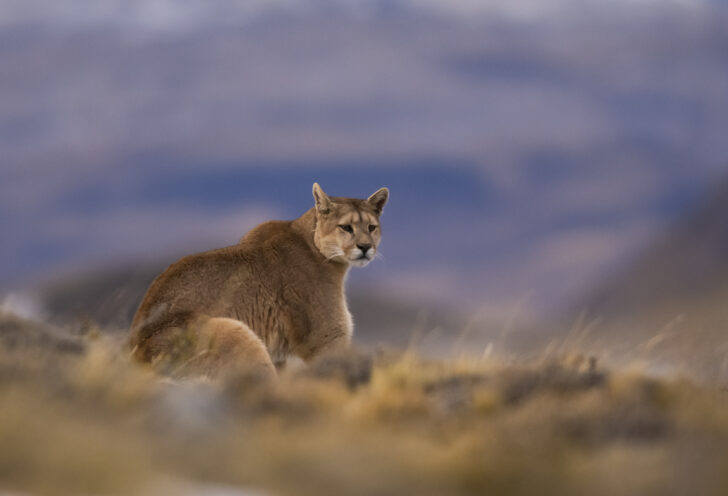
The highest density of pumas can be found in Torres del Paine National Park in the Magallanes Region of Chile. Without a doubt, this is the place to visit for the best chance of seeing pumas. Known by many as a paradise for hikers, with its emblematic granite towers, turquoise lakes, and impressive glaciers, this national park is also fantastic for wildlife lovers.
In particular, the eastern side of the park, characterized by its steppe and shrubland, offers an ideal habitat for prey. Rheas, foxes, armadillos, and guanacos make this side an efficient hunting ground for pumas. As we say in Patagonia, “where there are guanacos, there are pumas!” This area also tends to be less frequented by tourists than the centre of the park, where the W Trek hikes are located, and has areas that are completely dedicated to conservation, both of which help pumas thrive.
Further north, in the Aysén Region of Chile, the Patagonian steppe of Patagonia National Park comes as a close second for puma spotting opportunities. This off-the-beaten-path area has seen a resurgence in the mountain lion population since it was declared a national park in 2018, and its remoteness encourages more opportunities for wildlife sightings.
If you’re interested in discovering more about the best places to visit for puma and other wildlife encounters in Patagonia, don’t hesitate to reach out to our Patagonia specialists at 612-315-2894 or email [email protected].
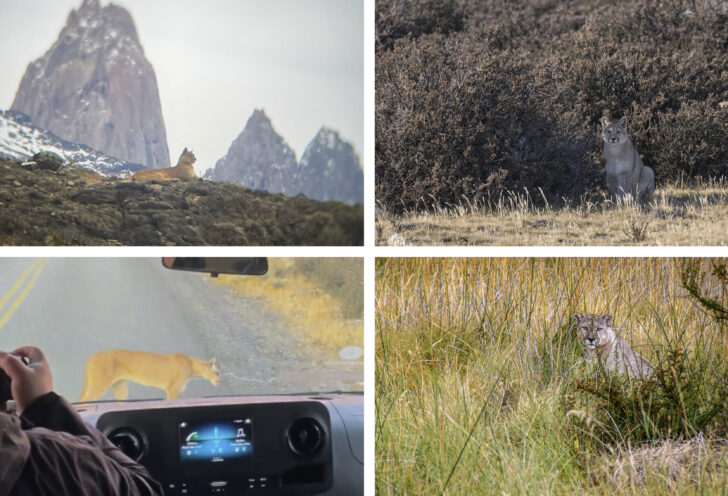
How To See Pumas In Patagonia
Although wild puma sightings can never be guaranteed, here are some details to consider to increase your chances of seeing one:
Time of Day and Year
Pumas tend to be most active around dawn and dusk, so depending on the time of year you visit Patagonia, try to get out on morning excursions around sunrise or afternoon excursions around sunset to improve your chances. Additionally, consider traveling in the shoulder seasons. October and April bring fewer visitors to the park, which usually correlates with more wildlife activity and a higher probability of spotting a puma. The last time that I drove through Torres del Paine National Park around sunrise in April, a one-eyed puma known as Blinka, who is one of the well-known mountain lions in the area, crossed right in front of our vehicle, completely unbemused!
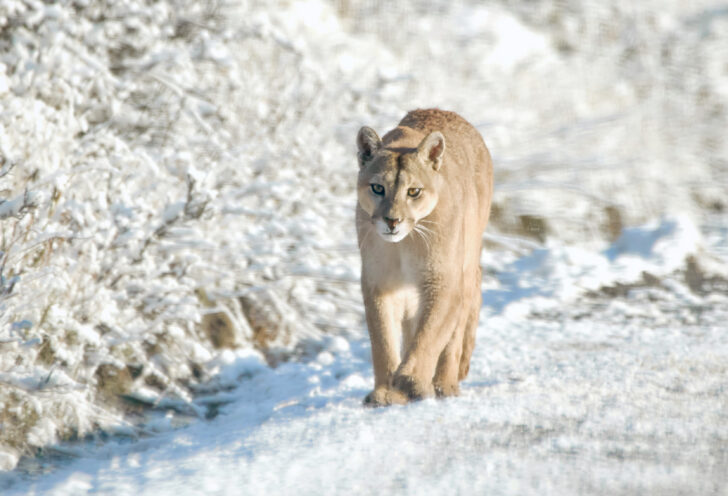
Photo credit: Eric Hunter, past Knowmad Traveler and Knowmad 2024 contest winner.
Lodge Location
Knowmad works with a fantastic range of luxury lodges in Torres del Paine, many of which are located just inside or on the edge of the national park. If seeing wildlife, including pumas, is one of your priorities for your trip, choose a lodge located on the eastern side of the park, such as Awasi Patagonia, Tierra Patagonia, or Estancia Cerro Guido. This could help increase the probability of seeing one, even just from the property itself.
Lodges with a Conservation Focus
If you have a particular passion for wildlife and conservation, include time at one of these lodges in your itinerary:
Estancia Cerro Guido has its own charitable foundation that aims to conserve both nature and local culture, allowing livestock farmers to live in harmony alongside pumas. Offering half-day and full-day safari-style excursions in a 4×4 vehicle to the conservation area where pumas and other animals pass through, you can spend ample time learning about conservation. This puma safari excursion can also be done from Patagonia Camp. On my last trip there, we had a wonderful encounter with a puma known by locals as Raya, and her sweet cubs, who were mischievously playing amongst the bushes, as she basked in the morning sun and looked on indifferently.
Explora Torres del Paine has its own conservation reserve, which is situated on the northeastern side of the park, where hiking and horseback riding excursions are offered. This area is more conducive to puma sightings than the area around the main lodge, which is surrounded by native forest. In December 2026, Explora will also be opening a new lodge in this area called Torres del Paine Conservation Reserve, with new excursions focused on conservation.
In northern Patagonia, within Patagonia National Park, Explora Parque Patagonia is the top choice for a lodge with a focus on conservation and a higher likelihood of puma encounters. The park was originally created by conservationists Douglas and Kristine Tompkins, and is now part of the Rewilding Chile project.
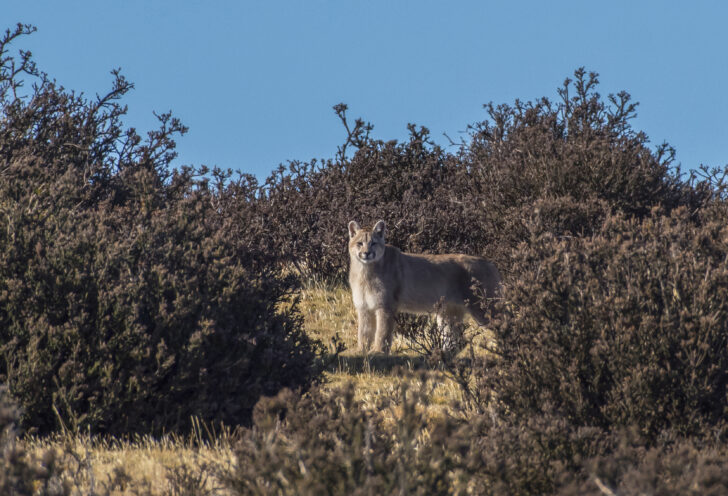
Photo credit: Ricardo Muza
Excursion Choices
Even if you decide to stay on the western or southern sides of Torres del Paine National Park, for example, at Explora Torres del Paine or Patagonia Camp, you can still increase your chances of a puma sighting by making careful excursion choices. When you meet with your guide at the start of your lodge stay, be sure to mention your interest in pumas and they will suggest specific excursions to areas known for mountain lion sightings such as Explora’s Torres del Paine Conservation Reserve or Estancia Cerro Guido. One of my favorite hiking excursions, offered by most lodges, that not only takes you through guanaco and puma territory, but also offers a discovery of the nomadic Aonikenk indigenous communities that inhabited this area, is Aonikenk or Hunter’s Trail. I had a wonderful puma sighting the last time I did it, where the puma went from observing on a hill far away in the distance, to slinking right across our trail just meters away as it stalked some guanacos!
Specific Puma Safari and Puma Tracking Excursions
If you want to spend more time fully focused on pumas, another option is to incorporate a puma tracking excursion into your Torres del Paine stay. Spend a day or two dedicated to tracking the path of pumas, and learning about their movements, behaviors, and more, with a private puma expert guide and vehicle. Knowmad can plan this for you, or some lodges also offer puma tracking excursions at an additional cost. This is a fantastic option for keen wildlife photographers who want to incorporate puma photography into their itinerary.
Whether or not you are able to spot pumas in Patagonia, you are sure to have a unique wildlife experience on your trip. Through our custom planning process, Knowmad’s goal is to map out an exciting itinerary that’s tailored to you and your interests. If you have any questions about pumas or other wildlife, or if you’d like to begin planning your own personalized trip to Chile, Argentina, or the whole of Patagonia, give one of our Trip Specialists a call at 612-315-2894 or send us an email.
 Olivia is a Trip & Operations Specialist at Knowmad Adventures. Passionate about languages and travel from a young age, she has lived in South America for over 7 years and now calls northern Patagonia, Chile, home. She enjoys hiking and spending time in nature and thrives on sharing her knowledge with fellow travelers.